There is a particular quality to the Manx landscape that resists the picturesque. The dunes do not compose themselves for the camera. The hillsides do not offer a convenient foreground. The mist comes in when it wants to and leaves when it is ready. What the Isle of Man does offer, consistently, is scale: the sense of the human body as a small thing in a very large and ongoing world.
These images are about that. The figure absorbed into landscape rather than placed in front of it.
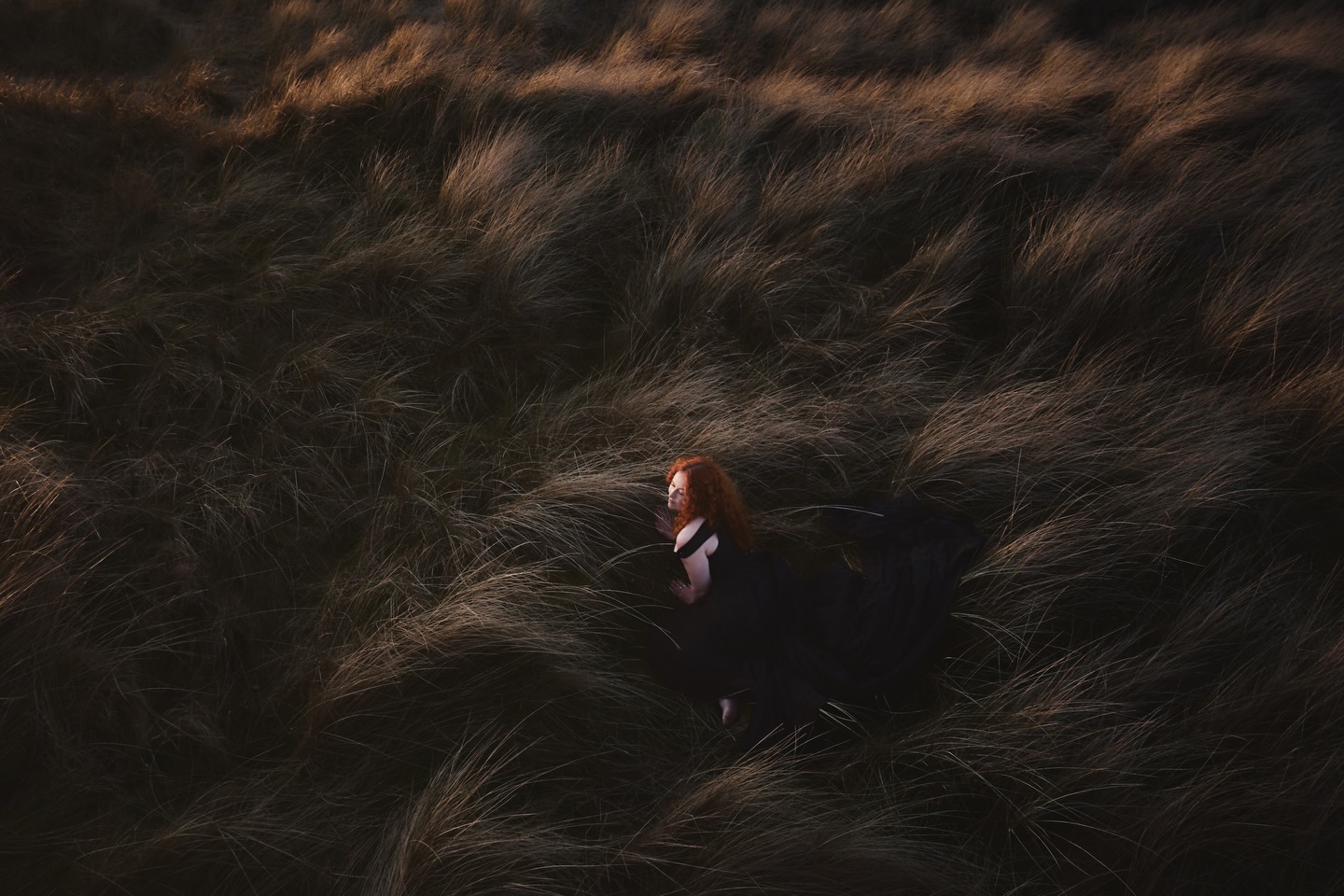
Sand dunes, Isle of Man — photographed from above, the figure becomes part of the pattern of the grass rather than separate from it.
What the Dunes Remember
The sand dunes of the Isle of Man are among the most botanically rich habitats on the island. They are also among the most ancient in feel — the grasses that grow in them are close relatives of the grasses that grew here during the Bronze Age, when the island's early inhabitants built their hill forts on the heights above. Standing in them at golden hour, when the light comes in low and horizontal and turns the grass the colour of amber bark, the dunes become something other than landscape. They become a kind of text.
Celtic mythology has no specific deity of dunes. The great feminine archetypes of the land tend toward mountains, rivers, and harvest fields. But the Cailleach — the divine hag of winter, the great Old Woman who shapes the land — has her origin in the windshaped, inhospitable places of the Celtic world. The dunes at dusk, emptied of human activity, the wind moving through the marram grass in long rhythmic passes, carry exactly her quality: ancient, indifferent, and shaping.
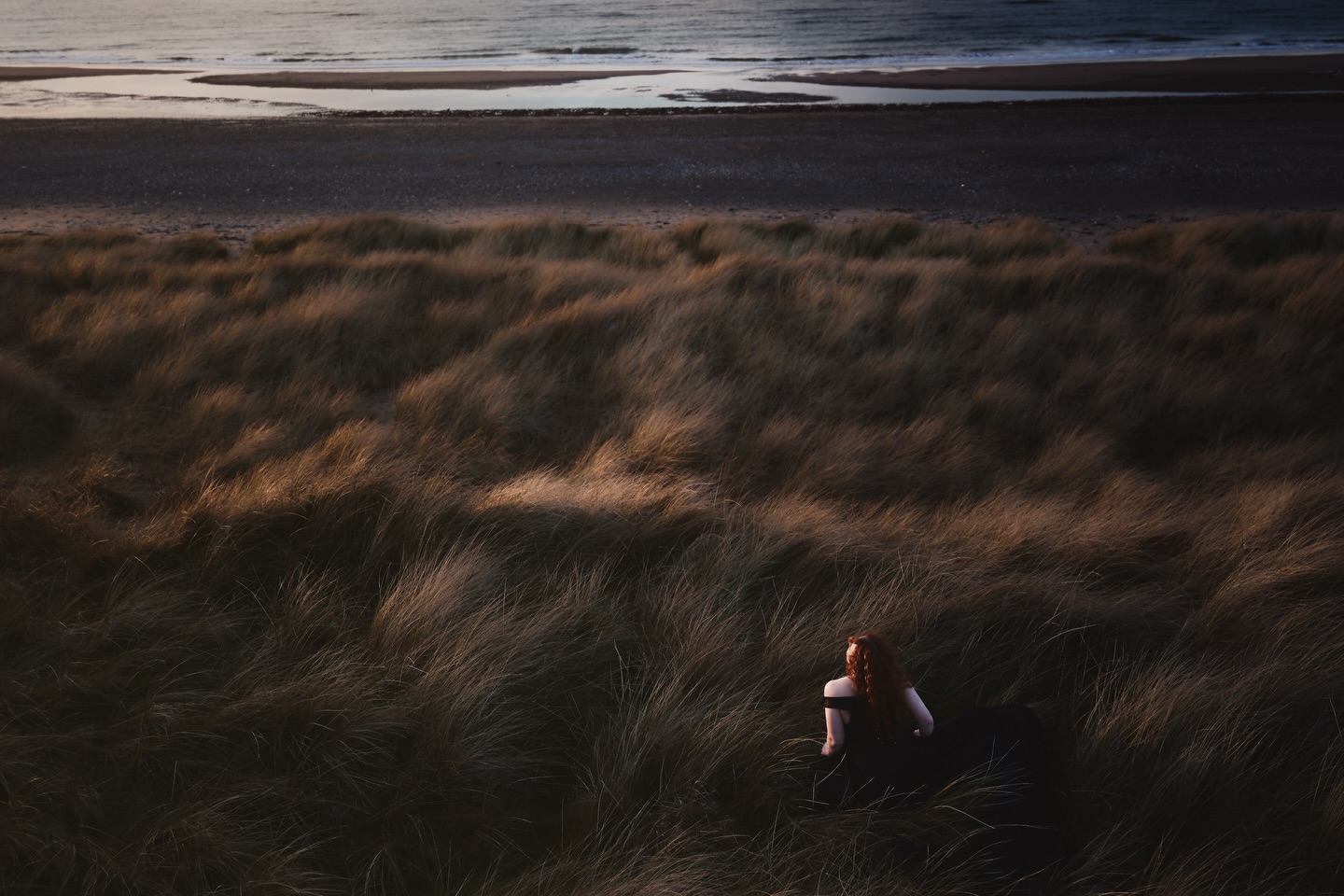
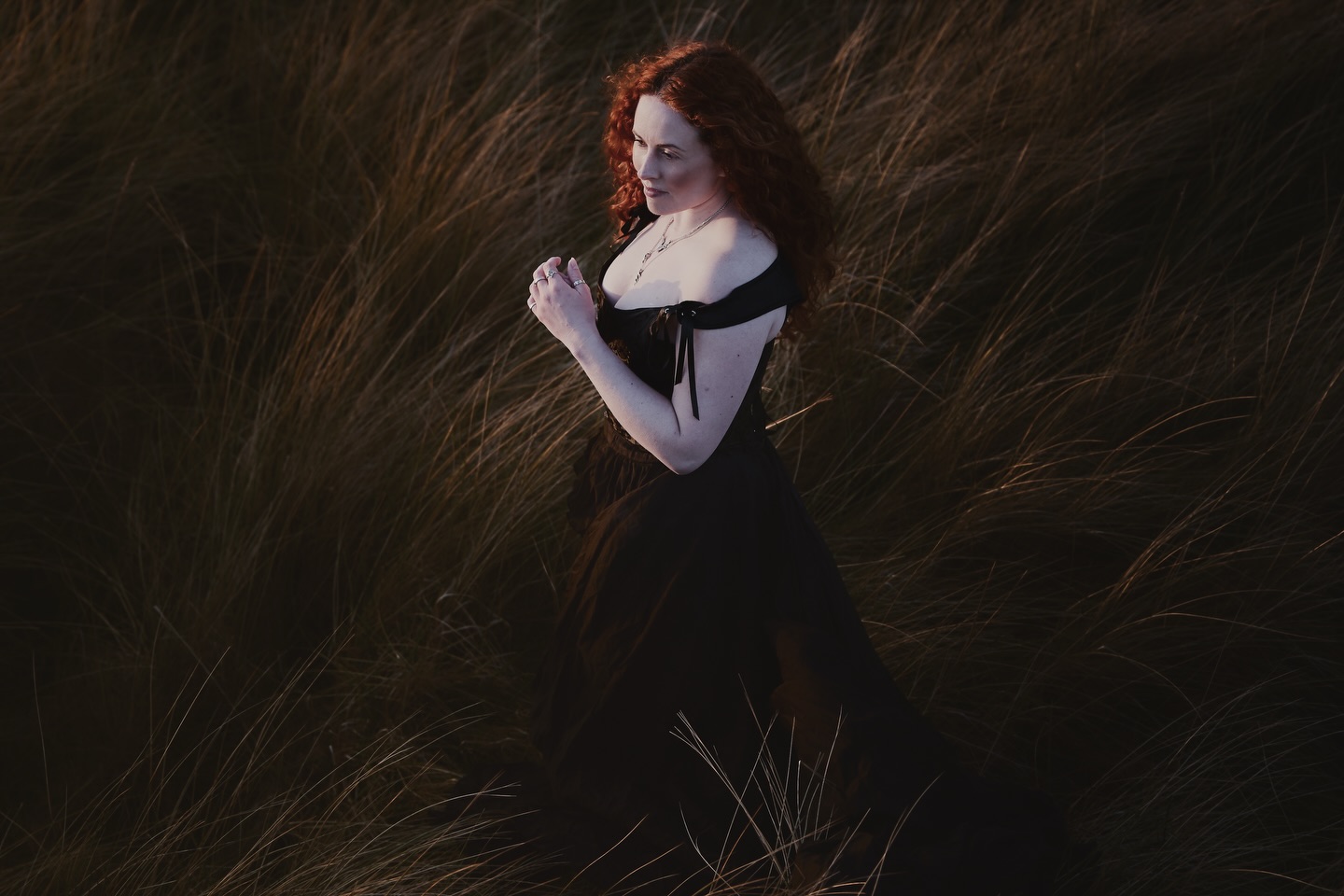
Aerial and portrait views of the same dune landscape — the scale of the landscape changes entirely depending on how close you stand.
"From above, the figure in the dunes is barely visible — a small warm thing in a very cold and very old world. That is the accurate proportion. The image is just honest about it."
— Ciara, wildislandmedia.comSouth Barrule and the Celtic Wheel
South Barrule is one of the most significant sites on the Isle of Man. An Iron Age hillfort sits at its summit, with views across the whole island and out to the coasts of Ireland, Scotland, England, and Wales on a clear day. The mountain's name contains the Old Norse word for sacred enclosure, vé. In Norse tradition, a vé was a consecrated space where the gods were present. The Manx, whatever they called it before the Norse arrived, clearly also understood this hill as a place of particular power — the hillfort at its summit is one of the largest in the British Isles.
South Barrule is also, in Manx tradition, the home of Manannan Mac Lir — the sea god who gives the island its name and who, according to folklore, conceals the island in mist whenever it is threatened. On the morning I photographed here, the mist was exactly where the stories said it would be: settled around the upper slopes, obscuring the summit, the tree in the foreground bent permanently westward by a wind that never stops.
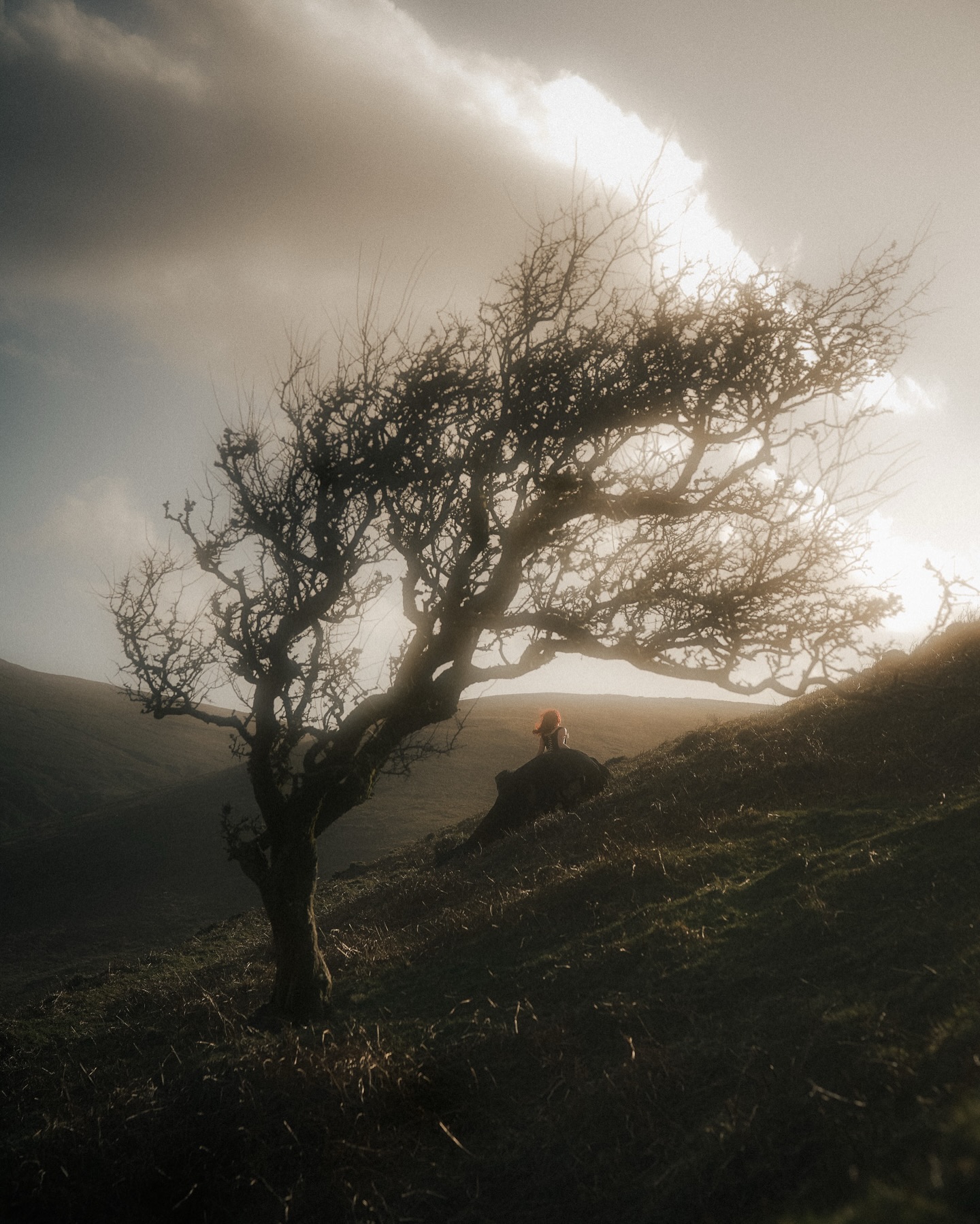
A windswept hawthorn on the slopes above South Barrule, Isle of Man — bent permanently by the prevailing wind. The Norse name for this hill contains the word for sacred enclosure: vé.
When Manannan Draws the Cloak
Manx legend holds that Manannan Mac Lir — the god of the sea and the island's original supernatural guardian — covers the island in mist to protect it from enemies. In the Manx language this is called the cleigh Manannan, the hedge or cloak of Manannan. The image is potent: a divine figure drawing weather around an island like a garment, with the mist understood not as obscuration but as protection.
The Celtic cloak in these photographs was not chosen for that reason — or not consciously. But photographing on a day when the mist came in from all directions, the ruined stone walls emerging and disappearing, the hillside alternately visible and swallowed. The mythology felt less like history and more like a weather report. The cloak that Manannan draws is real. It arrives from the west, it smells of the Irish Sea, and it makes the interior of the island feel genuinely remote from the world beyond the water.
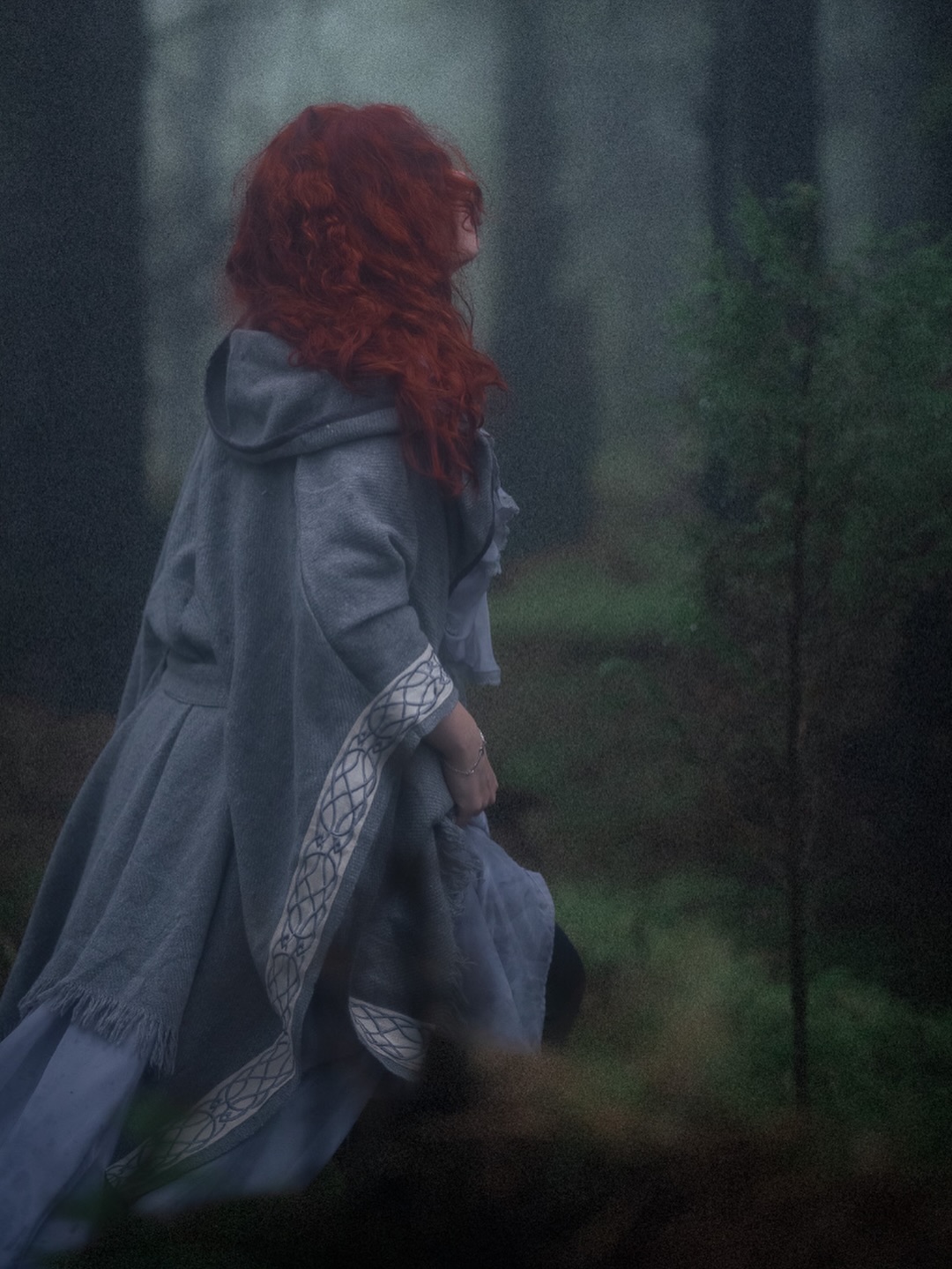
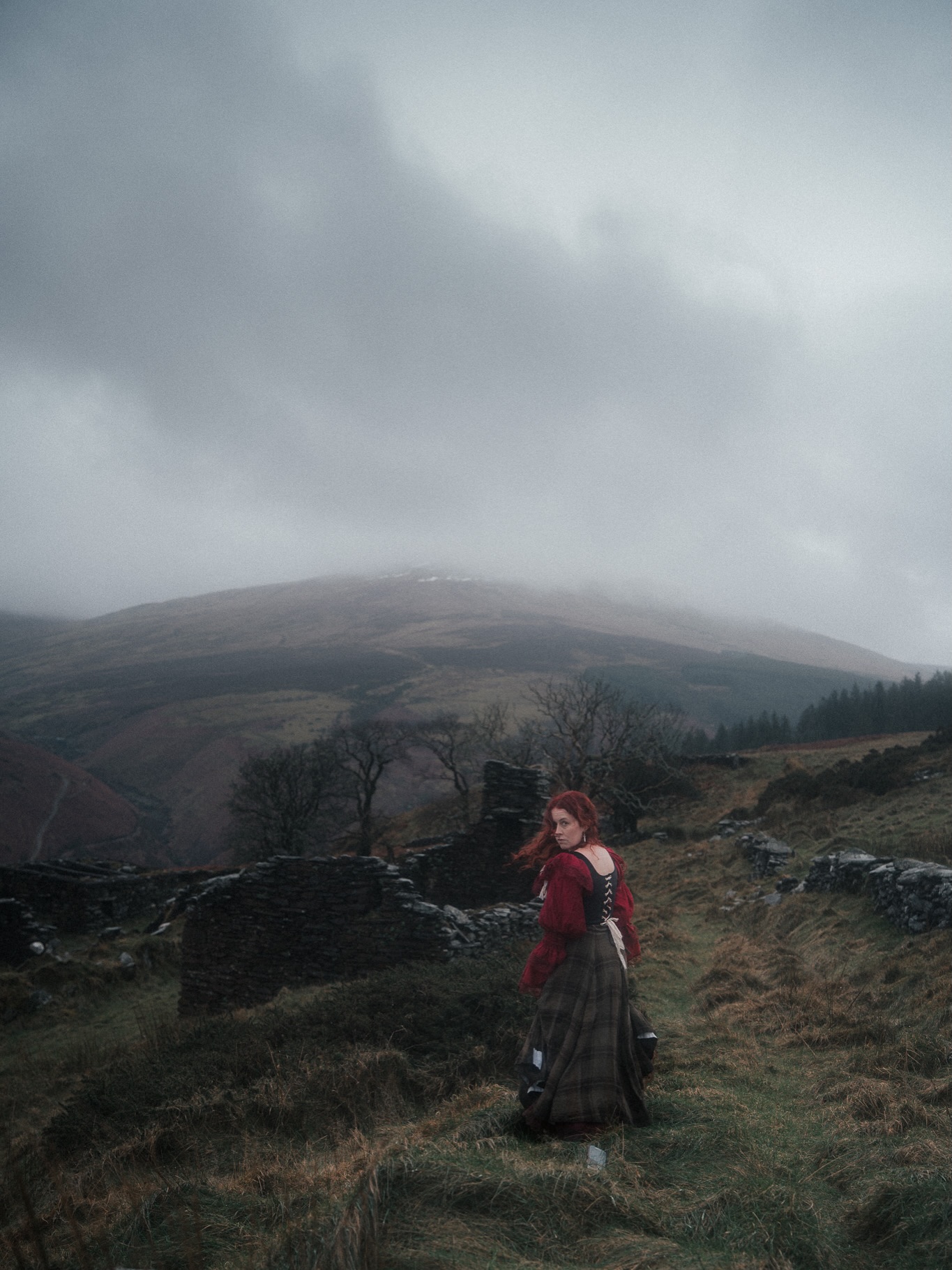
Left: Celtic knotwork cloak in a misty woodland — the embroidery is a modern piece but the pattern is ancient. Right: Ruined walls on a misty hillside — South Barrule in the background, cloud sitting on the summit.
"The Isle of Man is a small island in a large sea. Manannan pulls his cloak around it. The mist arrives. The interior becomes its own world, separate from everything outside the water."
— Ciara, wildislandmedia.comPhotographing the open landscape of the Isle of Man across the seasons as Biosphere Photographers in Residence, what becomes clear is that the mythology is not ornament. It is observation. The people who named the Cailleach and described the cloak of Manannan were not being fanciful. They were being precise, putting language to something they experienced regularly, in specific places, in specific weather. The dunes at dusk. The mist on South Barrule. The wind in the marram grass that bends the hawthorn permanently westward.
The photography is an attempt at the same precision. Not to illustrate the myth, but to be honest about the place.
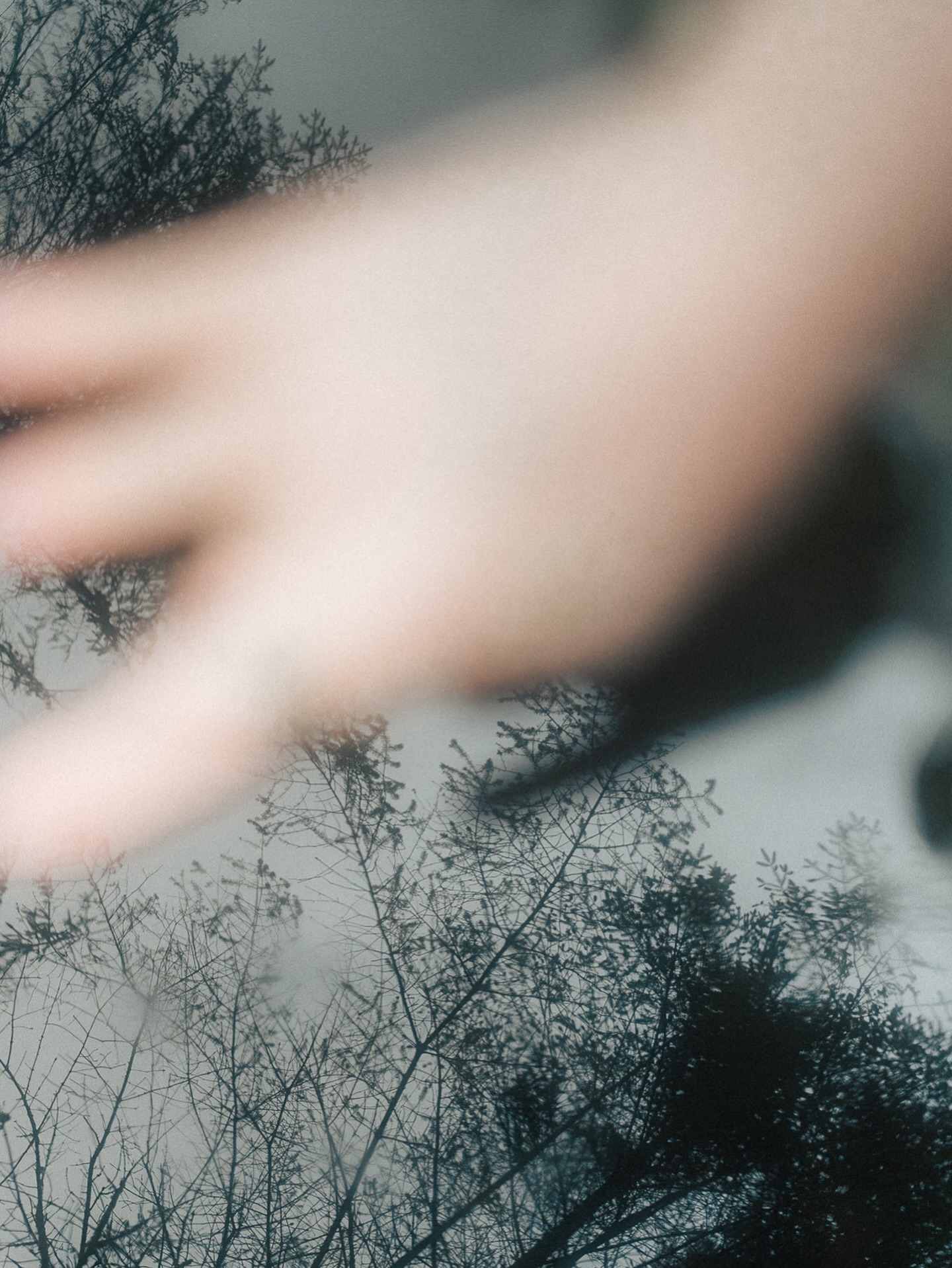
A hand moving through bare winter trees — the double exposure effect that happens when you move fast enough through a still landscape.
She has Celtic roots. Obviously.
More from the Journal
Field notes from the ancient North — mythology, landscape, and the seasonal pulse of the Celtic world.
Back to Journal →