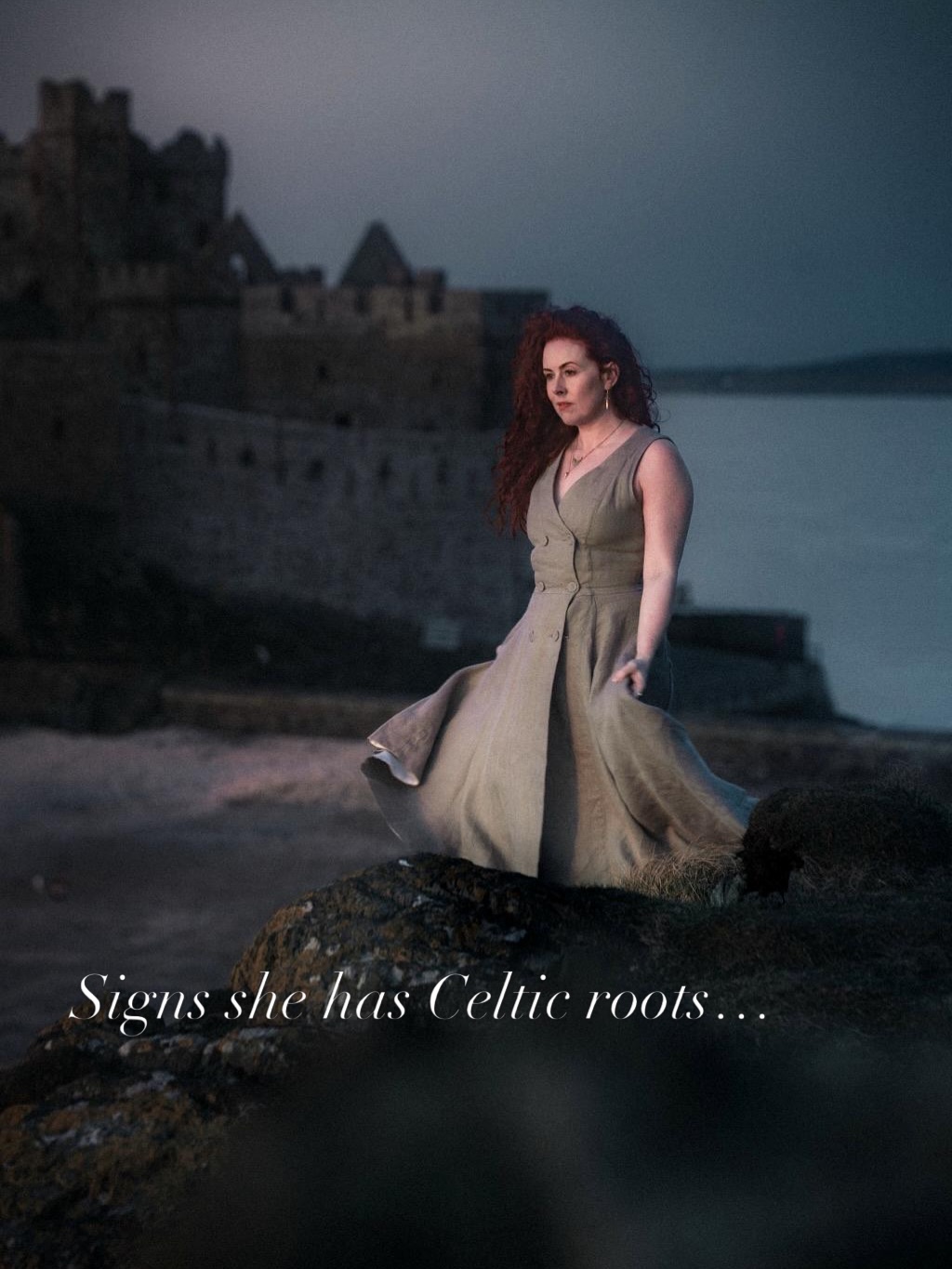
There are places that speak without language. Peel Castle is one of them. Built on St Patrick's Isle off the west coast of the Isle of Man, it has been accumulating stories for over a thousand years — Viking fortifications, Celtic monasteries, buried pagans, and phantom hounds. Something of all of that remains in the stone. You feel it before you understand it.
She's fascinated by old castles. So am I. And so was everyone who stood here before us, which is part of why the place has weight.
What I’m Wearing
The linen dress throughout this shoot is by Son de Flor — a slow fashion brand making timeless linen pieces crafted to be worn in landscapes exactly like this one.
Shop Son de Flor →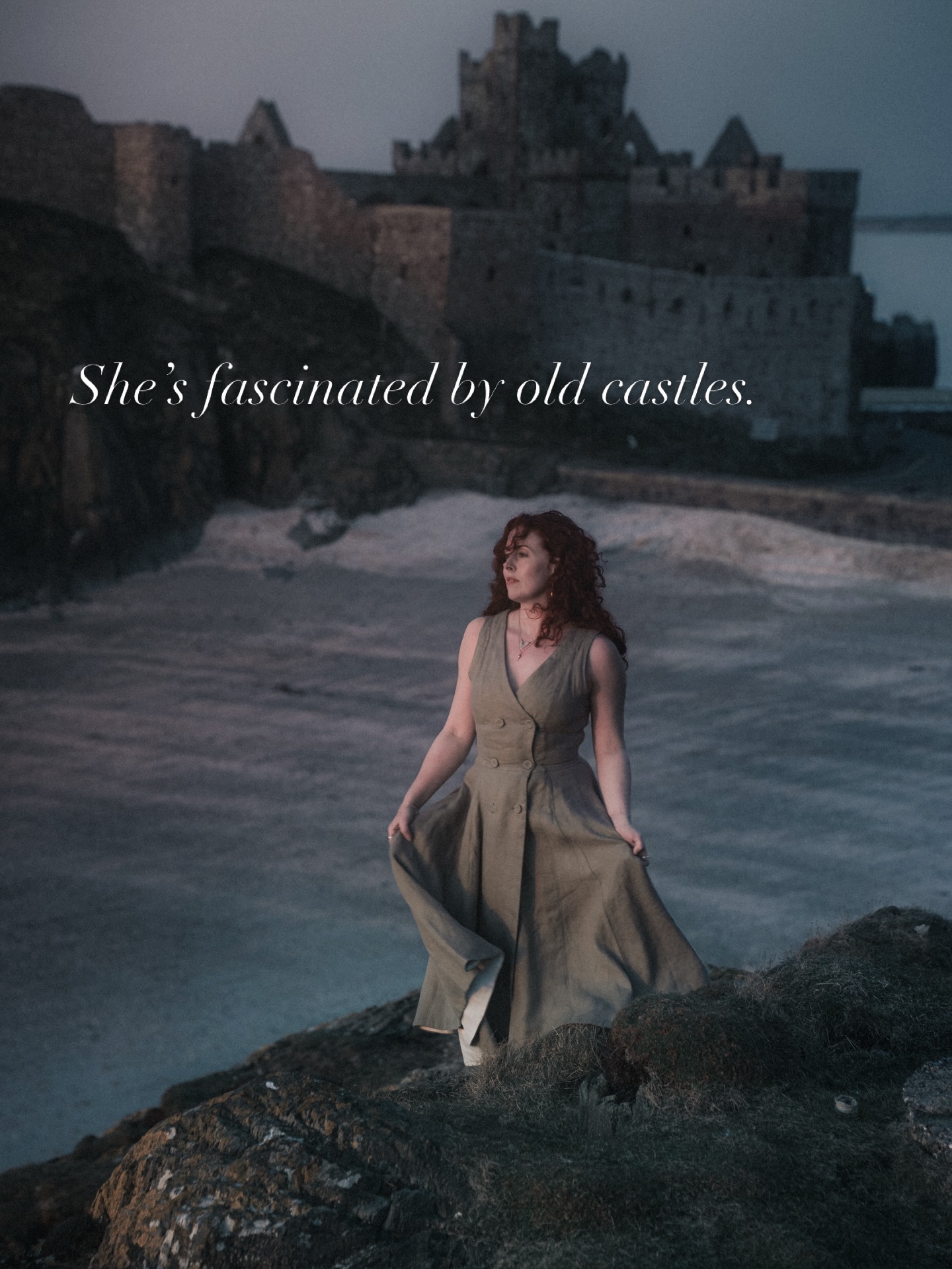
Peel Castle, St Patrick's Isle — Isle of Man. Built in the 11th century by King Magnus Barefoot of Norway on the foundations of a Celtic monastery.
A Viking Castle Built on Celtic Ground
Peel Castle was first constructed in the eleventh century by the Norwegian king Magnus Barefoot — built of timber on an island already occupied by a Celtic monastery. The round tower you see today was part of that monastery. The red sandstone walls were added in the fourteenth century. Layer upon layer, each era building over the last, until the whole structure became a kind of compressed history: Norse over Celtic over Bronze Age, faith and warfare and grief and law all pressed into the same stone.
Excavations carried out in the 1980s uncovered seven pagan Viking graves within what was by then a Christian cemetery. Among them was the Pagan Lady of Peel, a woman buried around 950 AD with seventy-one glass, amber and jet beads from across Europe and the eastern Mediterranean, a small pestle and mortar, an ammonite fossil, and an iron rod wrapped in a goose wing. The richest Viking-age female burial in the British Isles. She was probably a völva, a Norse seeress, buried in consecrated ground that her own people had already claimed as theirs.
"The past feels more real to her than the present. I know exactly what that means. Standing in front of Peel Castle at dusk, the present tense feels like the interruption."
— Ciara, wildislandmedia.com
The Black Dog That Kept the Watch
Peel Castle's most enduring legend is the Moddey Dhoo — Manx Gaelic for black dog. According to the earliest written account, recorded by the English topographer George Waldron in the early eighteenth century, a large black spaniel with shaggy curled hair appeared each evening in the castle's guardroom as soon as the candles were lit. It would lie down before the fire and remain there until dawn. The soldiers, though terrified at first, grew accustomed to it. But none would walk the castle passages alone while it was present.
The legend ended badly for a drunken soldier who dared the passages alone one night. He returned unable to speak and died three days later. The Moddey Dhoo was never seen again. The passage it used was sealed, and another way made.
Phantom black dogs are found across the British Isles: Black Shuck in East Anglia, the Barghest in Yorkshire. All carry the same association of thresholds, death, and warning. The connection to Viking settlements is significant; many of these legends have associations with Viking settlements, and excavations in the castle grounds uncovered the remains of a bishop with a large dog skeleton at his feet. The Moddey Dhoo may be older than the castle itself.
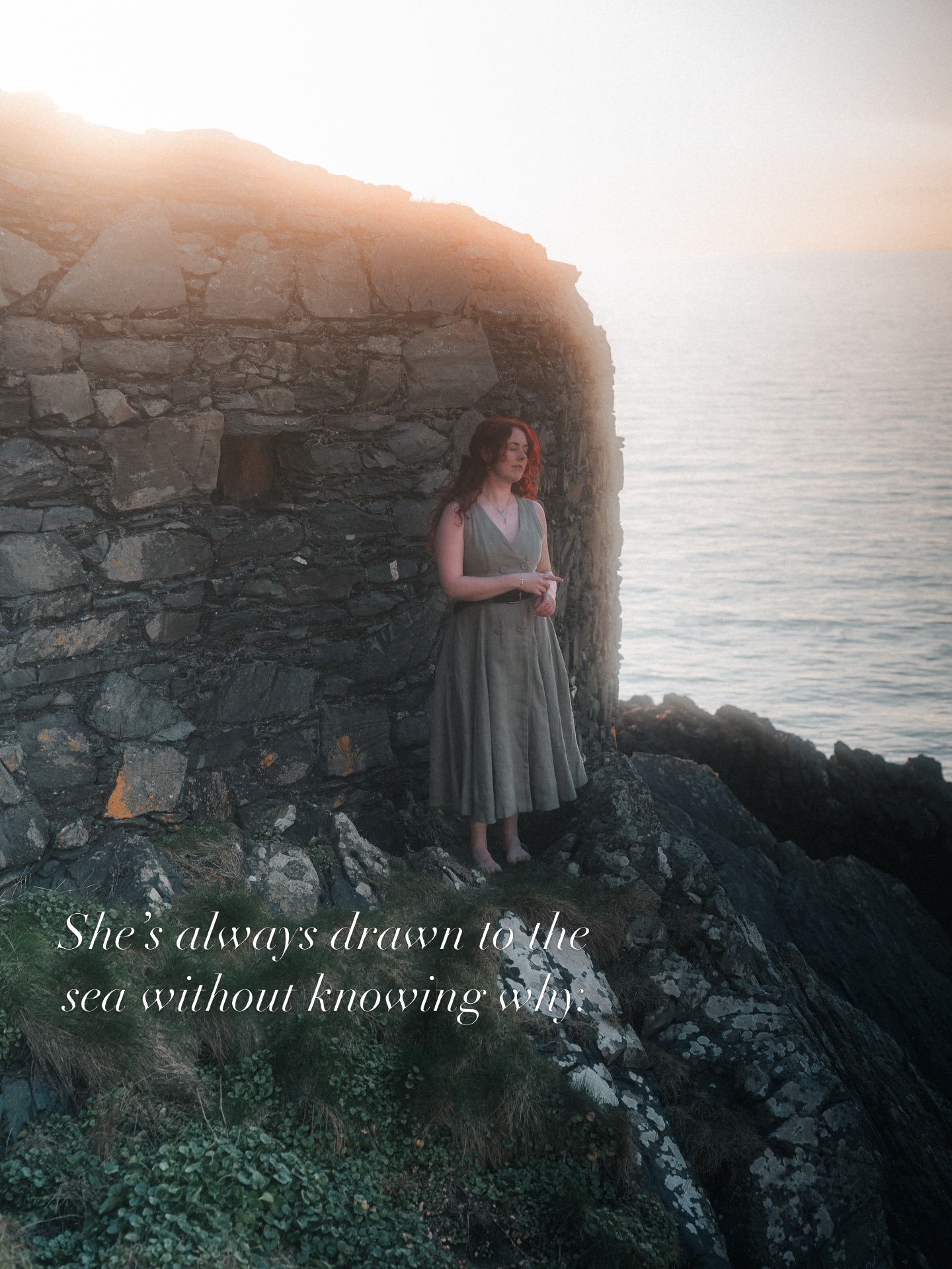
Coastal ruins, Isle of Man — barefoot on the rocks at sunset.
Always Drawn to the Sea
There is a particular quality to the light at Peel in the evening. The Irish Sea turns pewter, then copper, then something darker. A colour that does not have a name. The castle walls absorb it differently to the sky. You stand on the rocks below and feel the pull of it without being able to say exactly what you're being pulled toward.
She walks barefoot whenever she can. There is something about direct contact with the rock — the cold, the unevenness, the specific resistance of this particular stone. It feels like information. Like a conversation the body is having that the mind can only partially overhear.
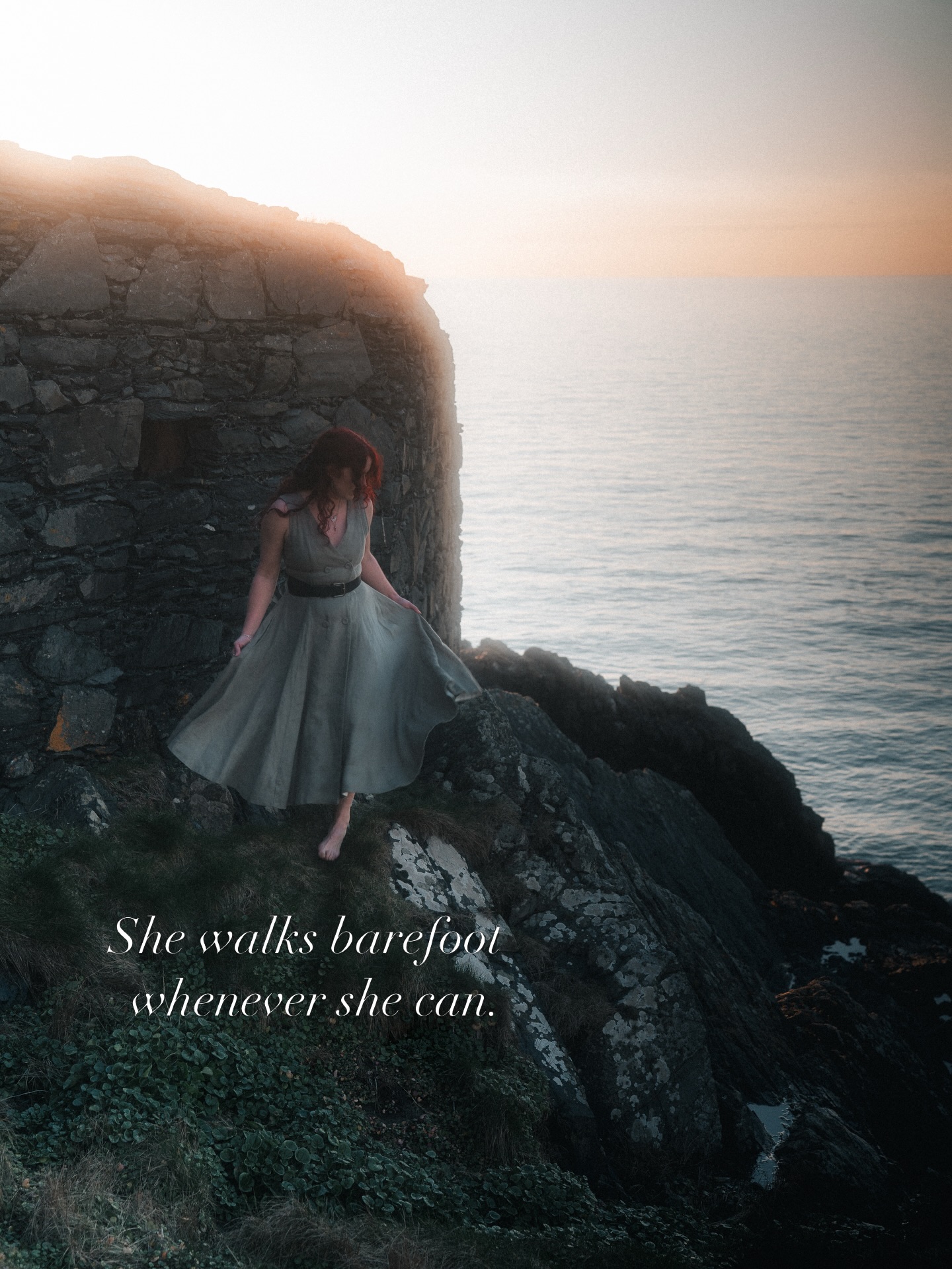
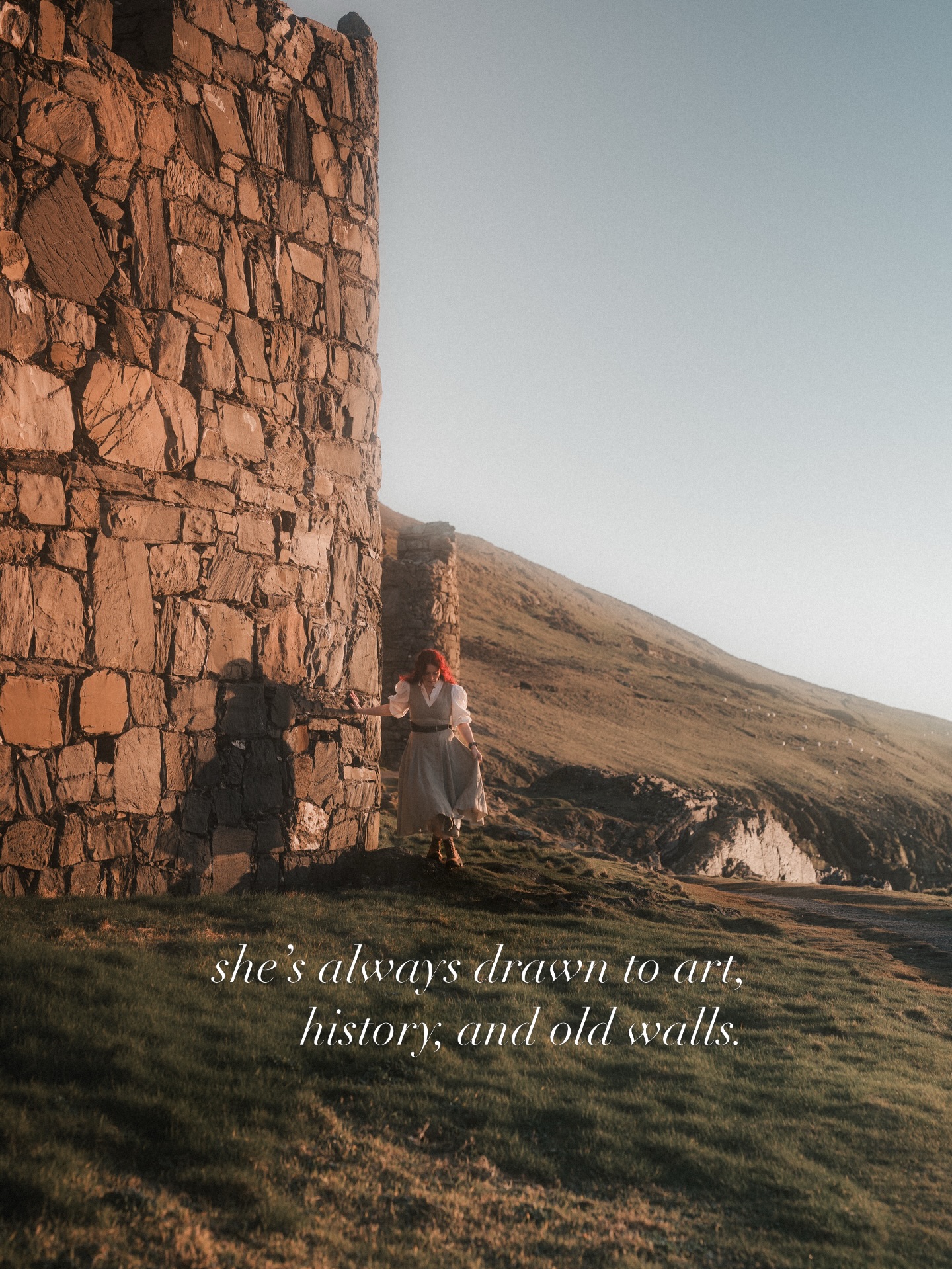
"She's always drawn to art, history, and old walls. I understand this as a form of listening — the body tuning to frequencies the present doesn't broadcast."
— Ciara, wildislandmedia.comThe Past Feels More Real Than the Present
The Isle of Man has been inhabited continuously for over eight thousand years. Every patch of ground here has been stood on by someone with a different name for it, a different god, a different understanding of what the light meant and what the sea was saying. Shooting at Peel Castle is not, for me, about making the past look romantic. It is about trying to photograph the actual texture of a place that has accumulated that much meaning.
The stones don't care about the camera. They have been looked at by Vikings and Celtic monks and medieval bishops and eighteenth-century poets and modern tourists with phones. What they give back is the same in every century: the feeling that whatever you came here looking for, this place was here before you needed it, and will be here long after you've gone.
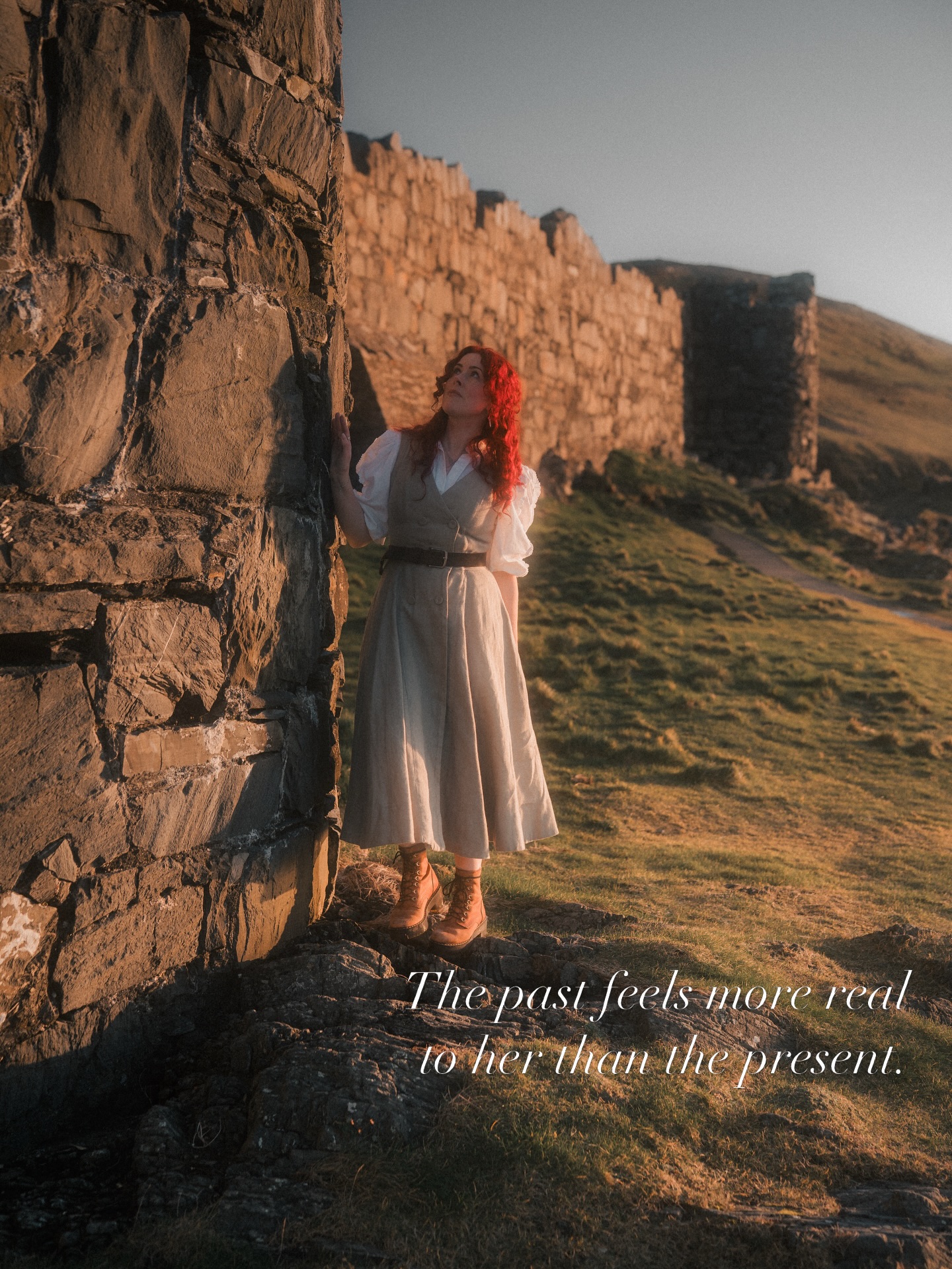
Ancient walls at golden hour — Isle of Man. "The past feels more real to her than the present."
She has Celtic roots. Obviously.
More from the Journal
Field notes from the ancient North — mythology, landscape, and the seasonal pulse of the Celtic world.
Back to Journal →